
Contents
These professionals are often dealing in versions of stock index funds like the E-mini S&Ps, because they seek consistency and risk-mitigation along with top performance. They must filter market data to work into their software programming so that there is the lowest latency and highest liquidity at the calculated bets time for placing stop-losses and/or taking profits. With high volatility in these markets, this becomes a complex and potentially nerve-wracking endeavor, where a small mistake can lead to a large loss. Absolute frequency data play into the development of the trader’s pre-programmed instructions.

Algorithmic and high-frequency trading were shown to have contributed to volatility during the May 6, 2010 Flash Crash, when the Dow Jones Industrial Average plunged about 600 points only to recover those losses within minutes. At the time, it was the second largest point swing, 1,010.14 points, and the biggest one-day point decline, 998.5 points, on an intraday basis in Dow Jones Industrial Average history. Forward testing the algorithm is the next stage and involves running the algorithm through an out of sample data set to ensure the algorithm performs within backtested expectations.
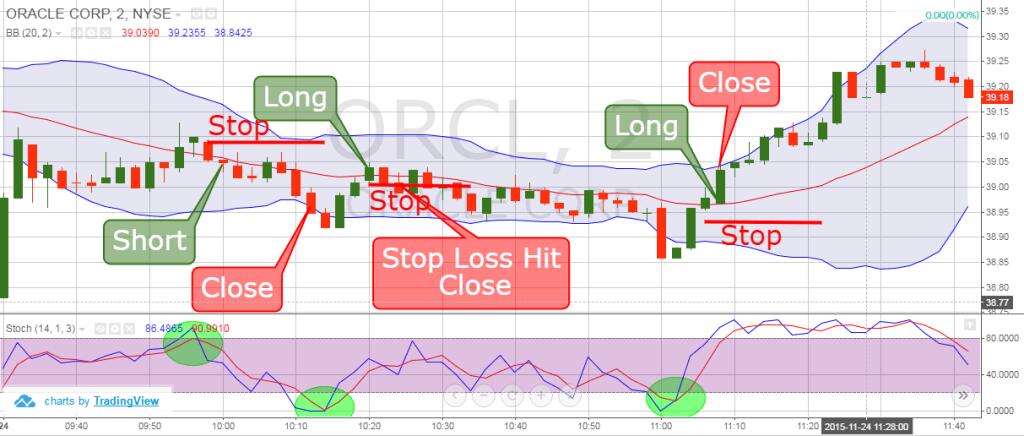
Strategies designed to generate alpha are considered market timing strategies. These types of strategies are designed using a methodology that includes backtesting, forward testing and live testing. Market timing algorithms will typically use technical indicators such as moving averages but can also include pattern recognition logic implemented using finite-state machines. When the current market price is less than the average price, the stock is considered attractive for purchase, with the expectation that the price will rise. When the current market price is above the average price, the market price is expected to fall.
However, registered market makers are bound by exchange rules stipulating their minimum quote obligations. For instance, NASDAQ requires each market maker to post at least one bid and one ask at some price level, so as to maintain a two-sided market for each stock represented. Arbitrage is not simply the act of buying a product in one market and selling it in another for a higher price at some later time.
What is Algorithmic Trading?
The long and short transactions should ideally occur simultaneously to minimize the exposure to market risk, or the risk that prices may change on one market before both transactions are complete. In practical terms, this is generally only possible with securities and financial products which can be traded electronically, and even then, when first leg of the trade is executed, the prices in the other legs may have worsened, locking in a guaranteed loss. Missing one of the legs of the trade is called ‘execution risk’ or more specifically ‘leg-in and leg-out risk’. In the simplest example, any good sold in one market should sell for the same price in another. Traders may, for example, find that the price of wheat is lower in agricultural regions than in cities, purchase the good, and transport it to another region to sell at a higher price.
As of the first quarter in 2009, total assets under management for hedge funds with HFT strategies were US$141 billion, down about 21% from their high. Cryptocurrency is highly speculative in nature, involves a high degree of risks, such as volatile market price swings, market manipulation, flash crashes, and cybersecurity risks. Cryptocurrency is not regulated or is lightly regulated in most countries. Cryptocurrency trading can lead to large, immediate and permanent loss of financial value. You should have appropriate knowledge and experience before engaging in cryptocurrency trading. The volume a market maker trades is many times more than the average individual scalper and would make use of more sophisticated trading systems and technology.
- While many experts laud the benefits of innovation in computerized algorithmic trading, other analysts have expressed concern with specific aspects of computerized trading.
- Computerization of the order flow in financial markets began in the early 1970s, when the New York Stock Exchange introduced the „designated order turnaround” system .
- It has grown significantly in popularity since the early 1980s and is used by institutional investors and large trading firms for a variety of purposes.
- Traders may, for example, find that the price of wheat is lower in agricultural regions than in cities, purchase the good, and transport it to another region to sell at a higher price.
A trader on one end (the „buy side”) must enable their trading system (often called an „order management system” or „execution management system”) to understand a constantly proliferating flow of new algorithmic order types. The R&D and other costs to construct complex new algorithmic orders types, along with the execution infrastructure, and marketing costs to distribute them, are fairly substantial. What was needed was a way that marketers (the „sell side”) could express algo orders electronically such that buy-side traders could just drop the new order types into their system and be ready to trade them without constant coding custom new order entry screens each time. Algorithmic trading has caused a shift in the types of employees working in the financial industry. For example, many physicists have entered the financial industry as quantitative analysts. Some physicists have even begun to do research in economics as part of doctoral research.
Serving algo traders & quant funds
The trader then executes a market order for the sale of the shares they wished to sell. Because the best bid price is the investor’s artificial bid, a market maker fills the sale order at $20.10, allowing for a $.10 higher sale price per share. The trader subsequently cancels their limit order on the purchase he never had the intention of completing.
On August 1, 2012 Knight Capital Group experienced a technology issue in their automated trading system, causing a loss of $440 million. Backtesting the algorithm is typically the first stage and involves simulating the hypothetical trades through an in-sample data period. Steps taken to reduce the chance of over-optimization can include modifying the inputs +/- 10%, shmooing the inputs in large steps, running Monte Carlo simulations and ensuring slippage and commission is accounted for. Alpaca Securities LLC charges you a transaction fee on certains securities which are subject to fees assesed by self-regulatory organization, securities exchanges, and or government agencies. To determine the exact amount of this fee with respect to any transaction, please contact
Researchers showed high-frequency traders are able to profit by the artificially induced latencies and arbitrage opportunities that result from quote stuffing. High-frequency funds started to become especially popular in 2007 and 2008. Many HFT firms are market makers and provide liquidity to the market, which has lowered volatility and helped narrow bid–offer spreads making trading and investing cheaper for other market participants. Securities and Exchange Commission and the Commodity Futures Trading Commission stated that both algorithmic trading and HFT contributed to volatility in the 2010 Flash Crash.
Securities and Exchange Commission and the Commodity Futures Trading Commission said in reports that an algorithmic trade entered by a mutual fund company triggered a wave of selling that led to the 2010 Flash Crash. The same reports found HFT strategies may have contributed to subsequent volatility by rapidly pulling liquidity from the market. As a result of these events, the Dow Jones Industrial Average suffered its second largest intraday point swing ever to that date, though prices quickly recovered. One 2010 study found that HFT did not significantly alter trading inventory during the Flash Crash.
Somos el catalizador del trading algorítmico en LATAM
This is due to the evolutionary nature of algorithmic trading strategies – they must be able to adapt and trade intelligently, regardless of market conditions, which involves being flexible enough to withstand a vast array of market scenarios. As a result, a significant proportion of net revenue from firms is spent on the R&D of these autonomous trading systems. Examples of strategies used in algorithmic trading include systematic trading, market making, inter-market spreading, arbitrage, or pure speculation, such as trend following. Many fall into the category of high-frequency trading , which is characterized by high turnover and high order-to-trade ratios. HFT strategies utilize computers that make elaborate decisions to initiate orders based on information that is received electronically, before human traders are capable of processing the information they observe. As a result, in February 2012, the Commodity Futures Trading Commission formed a special working group that included academics and industry experts to advise the CFTC on how best to define HFT.
Computerization of the order flow in financial markets began in the early 1970s, when the New York Stock Exchange introduced the „designated order turnaround” system . Both systems allowed for the routing of orders electronically to the proper trading post. The „opening automated reporting system” aided the specialist in determining the market clearing opening price (SOR; Smart Order Routing). Commission-Free trading means that there are no commission charges for Alpaca Securities self-directed individual brokerage accounts that trade U.S. listed securities through an API.
An asset with a known price in the future does not today trade at its future price discounted at the risk-free interest rate (or, the asset does not have negligible costs of storage; as such, for example, this condition holds for grain but not for securities). Use of computer models to define trade goals, risk controls and rules that can execute trade orders in a methodical way. Systematic trading includes both high frequency trading and slower types of investment such as systematic trend following.
Records and Information Management
Investors should consider their investment objectives and risks carefully before investing. More fully automated markets such as NASDAQ, Direct Edge and BATS in the US, have gained market share from less automated markets such as the NYSE. Economies of scale in electronic trading have contributed to lowering commissions and trade processing fees, vantage broker and contributed to international mergers and consolidation of financial exchanges. Though its development may have been prompted by decreasing trade sizes caused by decimalization, algorithmic trading has reduced trade sizes further. The speeds of computer connections, measured in milliseconds and even microseconds, have become very important.
One strategy that some traders have employed, which has been proscribed yet likely continues, is called spoofing. It is the act of placing orders to give the impression of wanting to buy or sell shares, without ever having the intention of letting the order execute to temporarily manipulate the market to buy or sell shares at a more favorable price. This is done by creating limit orders outside the current bid or ask price to change the reported price to other devops methoden market participants. The trader can subsequently place trades based on the artificial change in price, then canceling the limit orders before they are executed. Recently, HFT, which comprises a broad set of buy-side as well as market making sell side traders, has become more prominent and controversial. These algorithms or techniques are commonly given names such as „Stealth” , „Iceberg”, „Dagger”, ” Monkey”, „Guerrilla”, „Sniper”, „BASOR” and „Sniffer”.
The magnitude of these losses incurred by passive investors has been estimated at 21–28bp per year for the S&P 500 and 38–77bp per year for the Russell 2000. John Montgomery of Bridgeway Capital Management says that the resulting „poor investor returns” from trading ahead of mutual funds is „the elephant in the room” that „shockingly, people are not talking about”. Another disadvantage of algorithmic trades is that liquidity, which is created through rapid buy and sell orders, can disappear in a moment, eliminating the chance for traders to profit off price changes. Research has uncovered that algorithmic trading was a major factor in causing a loss of liquidity in currency markets after the Swiss franc discontinued its Euro peg in 2015. His book argued that these companies were engaged in an arms race to build ever faster computers, which could communicate with exchanges ever more quickly, to gain advantage on competitors with speed, using order types which benefited them to the detriment of average investors. As noted above, high-frequency trading is a form of algorithmic trading characterized by high turnover and high order-to-trade ratios.
Like market-making strategies, statistical arbitrage can be applied in all asset classes. Live testing is the final stage of development and requires the developer to compare actual live trades with both the backtested and forward tested models. Metrics compared include percent profitable, profit factor, maximum drawdown and average gain per trade. „Now it’s an arms race,” said Andrew Lo, director of the Massachusetts Institute of Technology’s Laboratory for Financial Engineering. „Everyone is building more sophisticated algorithms, and the more competition exists, the smaller the profits.” A special class of these algorithms attempts to detect algorithmic or iceberg orders on the other side (i.e. if you are trying to buy, the algorithm will try to detect orders for the sell side).
These include white papers, government data, original reporting, and interviews with industry experts. We also reference original research from other reputable publishers where appropriate. You can learn more about the standards we follow in producing accurate, unbiased content in oureditorial policy. Algorithmic trading is one of the strongest features of MetaTrader 4 allowing you to develop, test and apply Expert Advisors and technical indicators. With the emergence of the FIX protocol, the connection to different destinations has become easier and the go-to market time has reduced, when it comes to connecting with a new destination. With the standard protocol in place, integration of third-party vendors for data feeds is not cumbersome anymore.